
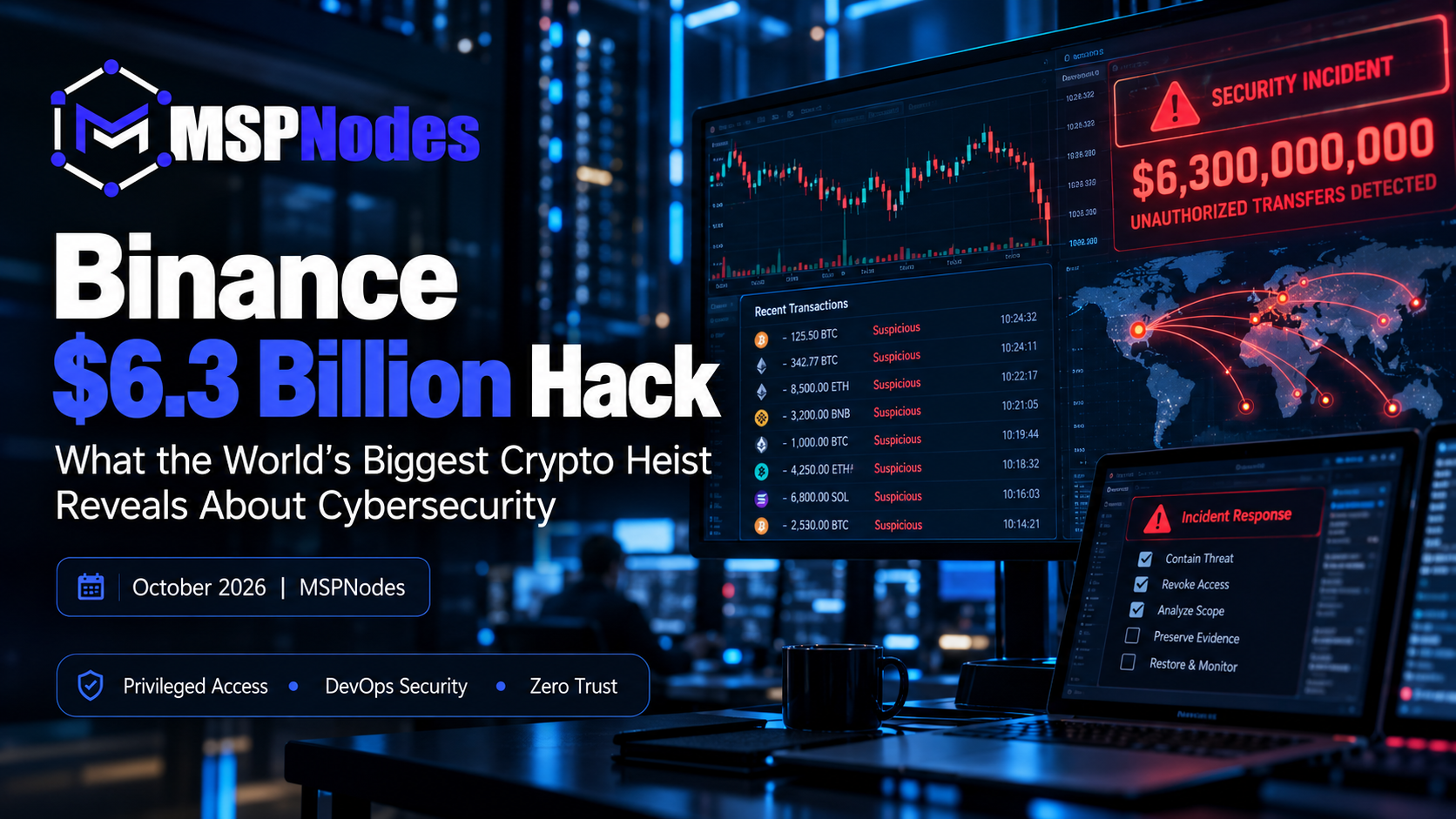
On October 29, 2026, Binance, one of the world's largest cryptocurrency exchanges, experienced a major security breach involving approximately $6.3 billion in digital assets.
The incident is potentially the largest cryptocurrency theft ever recorded, surpassing the $1.46 billion Bybit hack in February 2025.
The scale of the attack is alarming, but the amount stolen is only part of the story.
Initial investigations suggest that attackers may have gained access through a compromised DevOps engineer's laptop before reaching internal systems responsible for processing cryptocurrency transactions.
Blockchain security firms, including Elliptic, have also identified possible connections to North Korean hacking groups. However, the investigation is ongoing, and no final attribution has been publicly confirmed.
For businesses and Managed Service Providers (MSPs), the incident raises an important question: How much damage could an attacker cause if they gained access to a trusted employee's workstation or privileged account?

What Happened During the Binance Hack?
According to Binance's preliminary investigation, the breach may have started with a compromised laptop belonging to a DevOps engineer.
The attacker reportedly accessed an internal service container and used it to submit unauthorized cryptocurrency withdrawal transactions.
However, Binance later identified additional possible breach points, suggesting that the attack was more complex than initially understood.
The complete technical root cause has not yet been published.
Blockchain investigators traced stolen assets across multiple networks, including Ethereum, Bitcoin, Tron, and Solana.
Elliptic estimated that approximately $6.43 billion in cryptocurrency was stolen, while Binance placed the impact at around $6.3 billion.
One particularly concerning detail is that Binance initially reported finding no evidence that wallet private keys had been leaked.
This suggests the attackers may have been able to misuse legitimate transaction systems rather than directly stealing the cryptographic keys protecting the wallets.
Although the exact mechanism remains under investigation, the reported attack raises serious concerns about privileged access, service account permissions, and the separation between administrative systems and critical financial operations.
A compromised workstation should not automatically provide access to systems capable of authorizing high-value transactions.
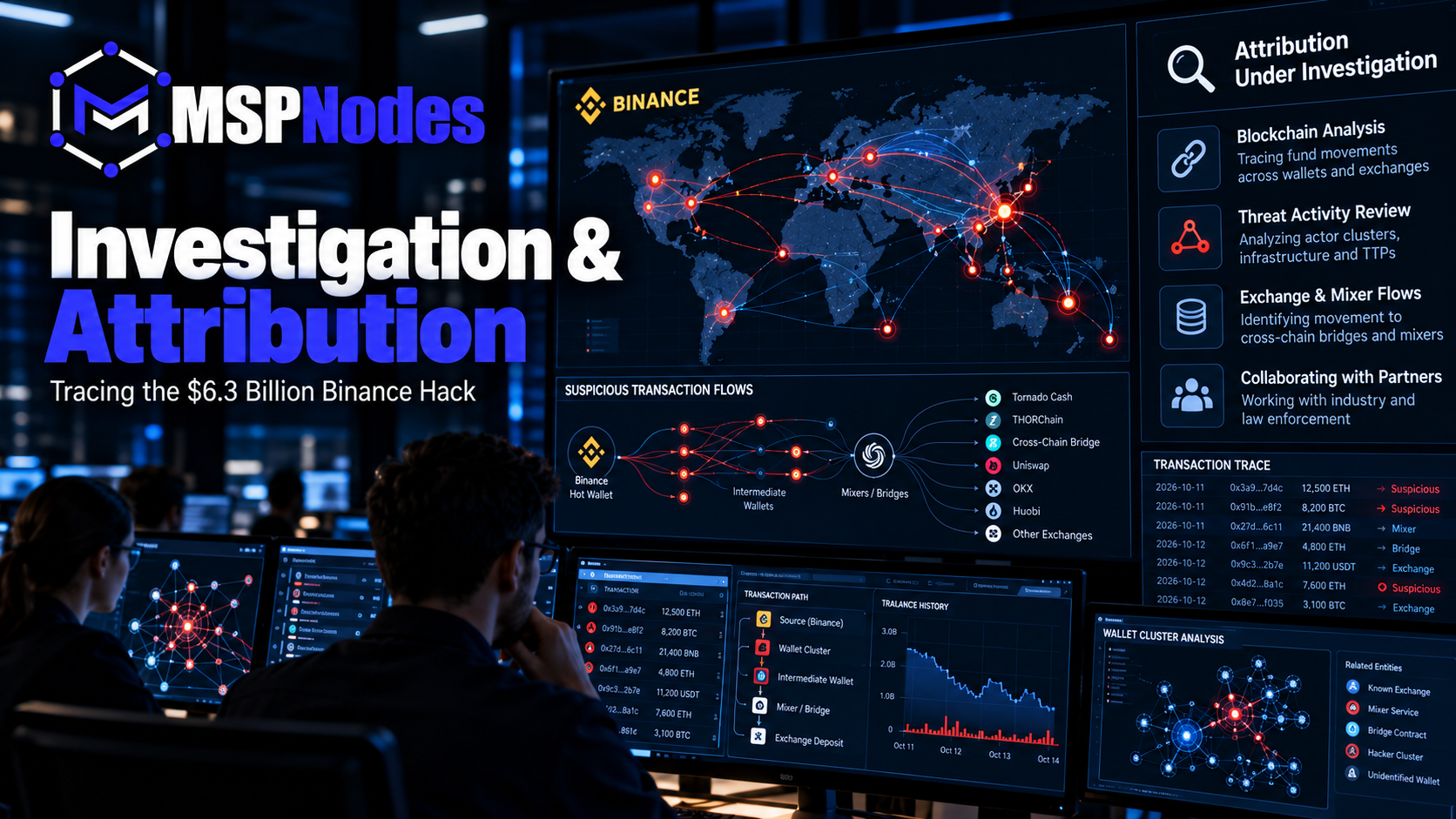
Were North Korean Hackers Responsible?
Several blockchain intelligence firms have identified similarities between the Binance breach and previous cryptocurrency attacks linked to North Korean threat actors.
Researchers have suggested possible connections to TraderTraitor, a hacking operation associated with the Lazarus Group.
Elliptic identified overlaps in cryptocurrency laundering activity and transaction patterns associated with previous suspected North Korean operations.
However, these findings do not conclusively establish who carried out the attack.
Shared cryptocurrency addresses or similar techniques may indicate connections between laundering networks without necessarily proving that the same attackers were responsible.
A reliable attribution requires further technical evidence, including information about the initial compromise, attacker infrastructure, and operational methods.
For now, North Korean involvement remains a strong investigative assessment rather than a confirmed conclusion.
How Much of the Stolen Cryptocurrency Has Been Recovered?
Following the breach, Binance worked with cryptocurrency issuers, blockchain security firms, and other industry partners to trace and restrict the movement of stolen assets.
As of October 30, 2026, Elliptic had independently verified approximately $2.84 billion in frozen cryptocurrency.
Binance reported that around $3 billion in affected assets had been frozen through coordinated efforts.
These figures are significant, but frozen assets should not be confused with recovered funds.
Freezing cryptocurrency can prevent an attacker from moving certain assets, particularly tokens issued by organizations with the ability to restrict transactions.
However, some cryptocurrencies, including Bitcoin and Ether, do not have a central issuer capable of freezing individual wallets.
The remaining stolen assets are still being tracked, and the final financial loss may change as investigations and recovery efforts continue.
Binance has also committed to covering customer losses using company resources and its Secure Asset Fund for Users (SAFU).
Five Cybersecurity Lessons Businesses Should Take from the Binance Hack
The Binance incident highlights security risks that extend beyond cryptocurrency exchanges.
Businesses of all sizes rely on privileged accounts, administrative workstations, cloud services, and automated systems to keep their operations running.
If those systems are compromised, attackers may be able to exploit legitimate access rather than relying on traditional malware techniques.
Here are five areas organizations should review.
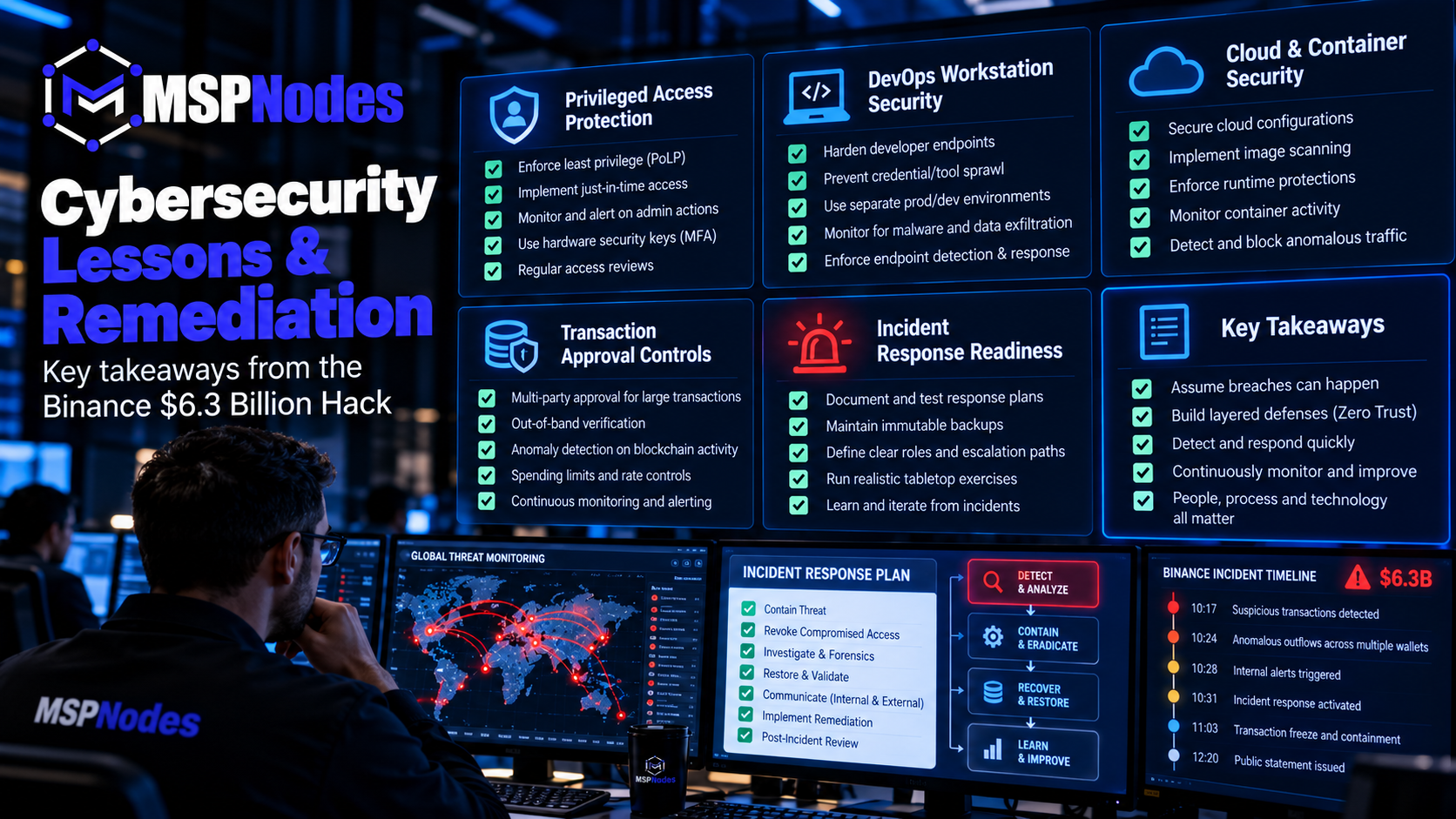
1. Limit Privileged Access
Employees and service accounts should only have access to the systems required for their responsibilities.
Administrative permissions should be reviewed regularly, with unnecessary privileges removed.
For sensitive operations, organizations should consider Privileged Access Management (PAM), just-in-time access, strong authentication, and independent approval requirements.
2. Protect Administrative and DevOps Workstations
Workstations used to manage production infrastructure require additional security controls.
Endpoint Detection and Response (EDR), application control, device compliance policies, and phishing-resistant multifactor authentication can help reduce exposure.
For particularly sensitive environments, dedicated privileged access workstations provide another layer of protection.
3. Strengthen Cloud and Container Security
Containers and cloud workloads should not have unrestricted access to production systems.
Review service account permissions, API credentials, secret management, network segmentation, and workload identities.
A compromised container should not automatically provide an attacker with access to unrelated applications or critical business systems.
4. Require Independent Approval for Critical Operations
High-value financial transactions and sensitive infrastructure changes should not depend on a single approval path.
Where appropriate, organizations should implement multi-party authorization, transaction limits, destination allowlisting, and independent verification.
These controls can help limit the damage caused by compromised accounts or automated services.
5. Prepare for Security Incidents Before They Happen
Security monitoring should identify unusual administrative activity, unexpected API requests, suspicious configuration changes, and abnormal transactions.
Organizations also need documented incident response procedures covering account isolation, credential revocation, evidence preservation, and recovery.
Having security tools installed is important, but knowing how to respond when those tools detect suspicious activity is equally critical.
What Does the Binance Hack Mean for Managed Service Providers?
For Managed Service Providers, the reported Binance attack highlights a risk that deserves particular attention: privileged access across multiple customer environments.
MSPs commonly use Remote Monitoring and Management (RMM) platforms, Microsoft 365 administration portals, cloud management tools, backup systems, and security consoles to support their clients.
These tools provide the access engineers need to resolve incidents and maintain infrastructure.
However, that same access can create significant security exposure if an administrator's account or workstation is compromised.
An attacker gaining control of a highly privileged MSP identity could potentially access multiple customer environments.
This is why MSP security needs to extend beyond endpoint protection.
Administrative roles should be restricted, management platforms should use strong authentication, and sensitive environments should be separated wherever practical.
Organizations should also review how automation credentials, service accounts, and remote access permissions are stored and managed.
Zero Trust security can help by requiring ongoing verification of users and devices while limiting access to the resources they actually need.
For MSPs, the objective is to ensure that one compromised workstation or account does not turn into an incident affecting multiple customers.
Final Thoughts
The reported $6.3 billion Binance hack demonstrates how quickly a security incident can become a major business crisis when attackers reach critical operational systems.
Although investigators have not yet confirmed the complete attack path, the possible involvement of a compromised DevOps workstation highlights the importance of protecting privileged access and maintaining clear boundaries between administrative and production environments.
For businesses and MSPs, the lessons are practical.
Keep administrative permissions limited, protect engineering workstations, monitor unusual activity, secure automation credentials, and test incident response procedures.
Cybersecurity is not simply about preventing every possible attack. It is also about making sure that one compromised device, account, or service cannot put an entire organization at risk.
At MSPNodes, we support businesses and Managed Service Providers worldwide with cybersecurity operations, cloud infrastructure management, Windows and Linux server administration, and managed IT services.
Our focus is on helping organizations maintain secure, reliable, and well-managed IT environments through experienced technical engineering.
Need support strengthening your infrastructure security or reviewing privileged access controls?
Visit https://www.mspnodes.com to explore our services and discuss your requirements.
Sources and Further Reading
Reuters — Binance $6.3 Billion Cryptocurrency Hack
Elliptic — The Largest Theft in History: North Korea Likely Behind the Binance Hack
https://www.elliptic.co/insights/binance-largest-hack-in-history/
Associated Press — North Korea-Linked Binance Attack
https://apnews.com/article/550e9b876550f71f07098494fe735beb
Binance — Official Security Incident Update
Published by MSPNodes | Managed IT Services • Cybersecurity • Cloud Infrastructure • White-Label IT Support